


WordPress continues to innovate as the world’s most popular content management system (CMS). This article will explore the top WordPress development trends shaping the future of the web, from AI integration to the rise of decentralized social networks.
Understanding these WordPress trends is crucial for web developers and website owners who want to build high-performance, secure, and future-proof WordPress websites that meet ever-increasing user expectations and deliver an exceptional user experience.
Why WordPress Development Trends Matter?
The digital realm is competitive, and your website is often your audience’s first contact point. A slow, outdated, or insecure website can drive away visitors and harm your brand.
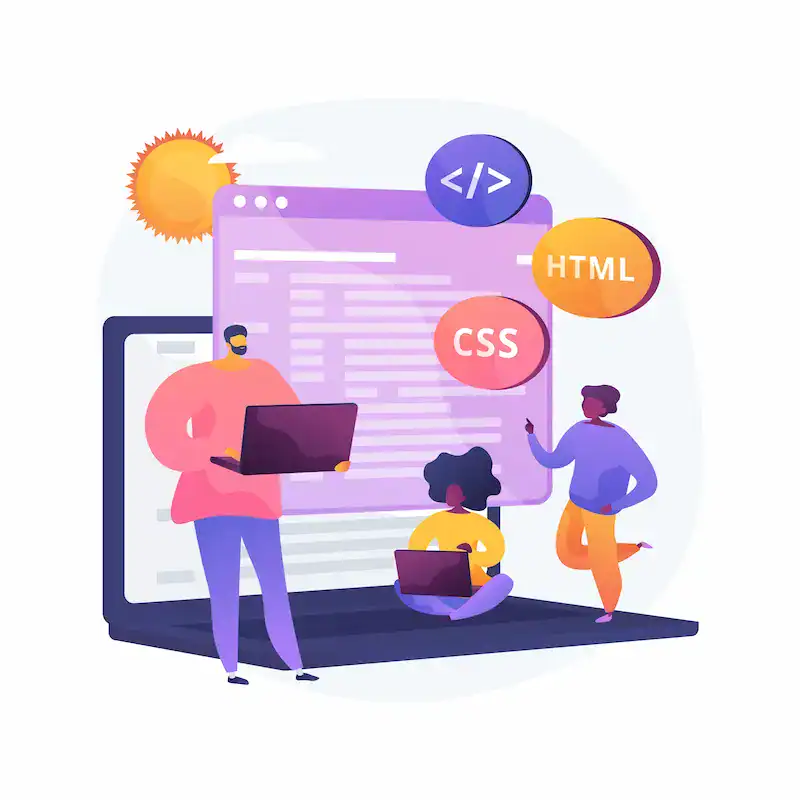
By embracing the latest WordPress trends, you can ensure your site is not just functional but a powerful tool for business growth. These development trends are not just fads but responses to changing user behavior, technological advancements, and the demand for more engaging and efficient digital experiences.
For WordPress developers, these trends dictate the new skills and technologies required to remain relevant. For website owners, they represent opportunities to enhance user engagement, improve SEO optimization, and gain a significant competitive advantage.
The right blend of modern design, enhanced security, and superior performance can transform a static site into a dynamic website that actively captivates its audience.
Build Your Future-Ready WordPress Website Today
Partner with WPServices to leverage the latest WordPress development trends and deliver a high-performing, user-friendly interface.
Top WordPress Development Trends to Watch
WordPress development is shaped by innovation, scalability, and user-centric experiences. These trends, from AI integration and headless architectures to sustainability and security, redefine how developers build, optimize, and future-proof WordPress websites.
AI-Powered WordPress Websites and AI Integration in Workflows
Artificial intelligence (AI) is no longer a futuristic concept; it is now a fundamental part of modern web development. AI integration will be a non-negotiable aspect of any serious WordPress development stack. AI tools transform how sites are built, managed, and optimized, making the development process more intelligent and efficient.
Native Generative AI Builders Streamline WordPress Site Creation
Introducing native generative AI builders revolutionizes how we approach content creation and design. These sophisticated AI tools can create entire WordPress sites from a simple text prompt. By leveraging machine learning models, they can generate high-quality copy, select a design, and even suggest a layout, allowing non-technical users to build beautiful, functional WordPress websites with just a few clicks. This capability democratizes the web, empowering millions to launch their online presence faster than ever.
AI Enhances Developer Productivity and Code Generation
While AI makes it easier for non-developers, it’s also a powerful assistant for seasoned WordPress developers. AI assistants can analyze code, identify security vulnerabilities, and even generate boilerplate code for custom plugins.
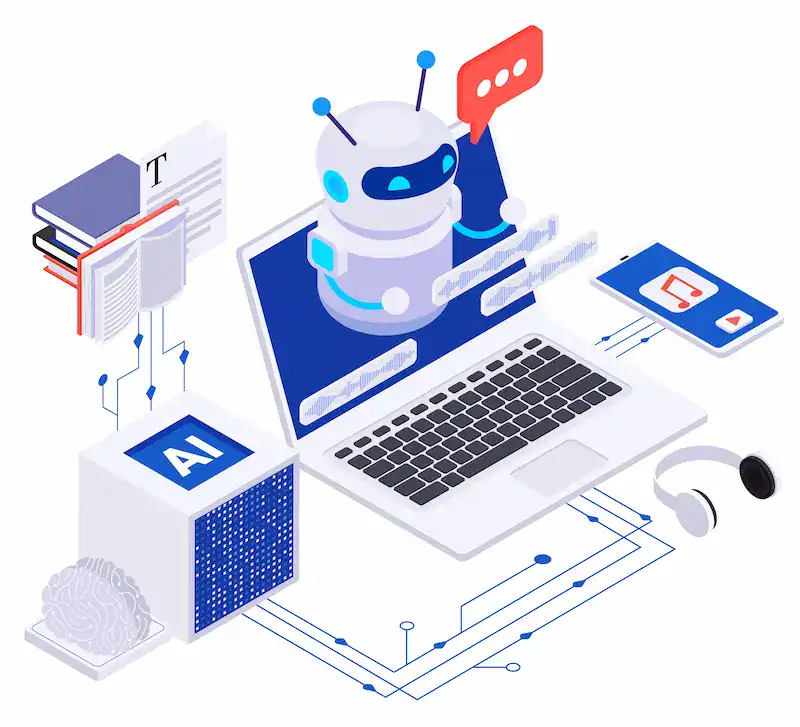
This drastically improves WordPress workflows, allowing developers to focus on complex problem-solving and innovative features rather than repetitive coding tasks.
This new era of collaboration between humans and AI will lead to faster project delivery and higher-quality code, fundamentally changing the WordPress developer stack. AI-driven predictive analytics will also help developers map a predictive user journey and identify potential friction points on a site.
Also Learn: Custom WordPress Development Services: An Ultimate Guide
The Rise of Block-First Development and Block Themes
The Gutenberg block editor has evolved far beyond a simple text editor. It has become the cornerstone of the modern WordPress development experience. The shift towards a block-first mentality will be complete, with the block editor providing a seamless, visual interface for every aspect of site building.
Block Themes Become the Standard for Modern WordPress Sites
Block themes, explicitly built for the full site editor, will be the new standard. These themes provide unparalleled flexibility, allowing WordPress users to customize every part of their site with blocks, from the header to the footer.
This shift from traditional, monolithic themes gives WordPress developers and users more granular control over design, making sites more adaptable and easier to manage. This approach also naturally supports the separation of concerns, paving the way for more maintainable and performant sites.
Full Site Editor Empowers Visual No-Code Site Building
The site editor is an incredible tool for visual, no-code site building. It allows users to build complex layouts and custom designs without writing a single line of code. For web developers, this means they can deliver powerful, customizable templates that clients can easily manage independently, reducing the need for constant maintenance and updates. The full site editor is the next evolution in making WordPress a truly accessible content management system.
Headless and Hybrid Headless WordPress Architectures
For years, the monolithic nature of WordPress has been a point of contention for some developers. The headless WordPress architecture, which decouples the frontend from the backend, is a solution that is gaining mainstream adoption. This trend will accelerate, with a focus on hybrid models that combine the best of both worlds.
Headless WordPress Enables Faster, Flexible Front-End Development
A headless WordPress architecture allows developers to use WordPress as a powerful content management system (cms) while building the frontend using modern JavaScript frameworks like React or Next.js. This approach offers significant benefits:
- Performance Optimization: A decoupled frontend can be a static site, leading to lightning-fast site speed and better performance optimization.
- Enhanced Security: By separating the frontend, the attack surface for potential data breaches is significantly reduced.
- Unmatched Flexibility: Developers can build a single WordPress backend that feeds content to multiple frontends, including mobile apps, smart devices, and online stores.
Hybrid Headless CMS Balances Flexibility with WordPress Ecosystem
While pure headless WordPress is powerful, it can also be complex. The hybrid headless model offers a pragmatic solution. It maintains WordPress’s native templating for most of the site while using a headless approach for specific, content-rich sections.
This allows WordPress users to continue benefiting from the vast WordPress ecosystem of plugins and themes while gaining the performance advantages of a headless setup for critical pages. This is the sweet spot for many WordPress developers.
Supabase as a scalable Backend Solution for Headless WordPress Projects
While WordPress is a robust backend, modern headless architectures often require a more dynamic backend. Supabase, an open-source alternative to Firebase, provides a real-time database, authentication, and serverless functions.
It can be a scalable backend solution, complementing the WordPress REST API to handle user-specific data, such as e-commerce transactions in online stores or complex user profiles, without overloading the WordPress database.
Framer and WordPress for Prototyping and Modern Front-End Experiences
Framer is a robust design and prototyping tool, now a no-code web builder. It excels at creating interactive, visually stunning websites. The new trend involves using Framer for the design and front-end development of the site while using WordPress as a dedicated, content-only backend.
This partnership allows designers to build beautiful, modern frontends that are “fed” content from the familiar and powerful WordPress content management dashboard, a perfect example of a hybrid headless workflow.
Voice Search Optimization, AR/VR, and Immersive Experiences
As user interaction methods evolve, so must web design. The rise of smart speakers and assistants means voice search is dominant. At the same time, augmented and virtual reality technologies are making the web more immersive than ever.

Voice Search Optimization Meets Changing User Search Behavior
Voice search optimization is now a crucial aspect of SEO. People speak to their devices differently from how they type. Voice queries are often longer, more conversational, and question-based. Content must be structured to provide concise, direct answers to rank for voice search.
- Focus on long-tail, conversational keywords.
- Create detailed FAQ sections that answer common questions directly.
- Use structured data (Schema Markup) to help search engines understand your content’s context.
AR and VR Integration Makes WordPress More Immersive
Augmented Reality (AR) and virtual reality (VR) are moving beyond gaming into mainstream web development. WordPress developers are beginning to integrate these technologies to create immersive user experiences.
For e-commerce sites, AR can allow customers to visualize a product in their own space before purchasing. For travel blogs, VR can offer a 360-degree tour of a destination. While still an emerging field, these technologies will change user interaction and provide powerful new ways to engage an audience.
Minimalist, Sustainable, and Mobile-First Web Design
The digital world has a carbon footprint, and a new trend focuses on minimizing it while maximizing performance and accessibility. The principles of minimalism and sustainability are gaining traction as development trends that are good for the planet and business.
Minimalist Typography-Driven Design Supports Performance and Readability
Minimalism is not about being boring; it’s about being intentional. A minimalist, typography-driven design approach reduces the need for heavy, data-intensive images and scripts.
Lighter pages load faster, which is excellent for site speed and helps with performance optimization. This style also improves readability and focuses the user’s attention on the content, which is key for content-rich websites.
Green Web Design and Eco-Friendly Hosting Boost Sustainability
Green web design practices are becoming a significant focus. This involves using energy-efficient code, optimizing images to reduce data transfer, and choosing eco-friendly hosting providers that run on renewable energy.
By lowering the digital carbon footprint, web developers and website owners contribute to a more sustainable internet, a growing concern for consumers, and a great way to improve brand reputation.
Dark Mode Enhances Accessibility and Modern Aesthetics
Dark mode is more than just a visual preference. It enhances accessibility for users with visual impairments and reduces eye strain, particularly on mobile devices.
From a sustainability perspective, dark mode can also reduce battery consumption on OLED screens. Offering a dark mode option is an easy way for a WordPress site to demonstrate its commitment to enhancing user experience and modern design principles.
Framer’s Role in Rapidly Prototyping Mobile-First WordPress Designs
As a premier prototyping tool, Framer is also used to create fluid, mobile-first designs for WordPress. Designers can rapidly build and test responsive layouts, ensuring a seamless experience across all mobile devices before handing the project to WordPress developers to implement the content management backend. This improves the efficiency of the design-to-development pipeline.
Further Reading: Designing for Responsiveness: Optimal Screen Sizes for Web Design
Performance Optimization, Core Web Vitals, and Theme Selection
Google’s Core Web Vitals will be more critical than ever. These metrics measure a site’s real-world user experience and are a crucial ranking factor. A fast, responsive, and visually stable site is no longer optional; it’s a requirement for success.

Prioritizing Core Web Vitals with Caching, Minification, CDNs, and Hosting
Optimizing for Core Web Vitals means focusing on three key metrics:
- Largest Contentful Paint (LCP): The time a page’s main content takes to load. Improve LCP by using a high-performance hosting provider, optimizing images, and implementing caching.
- Interaction to Next Paint (INP): The responsiveness of a page to user interaction. Improve INP by minimizing JavaScript and optimizing third-party scripts.
- Cumulative Layout Shift (CLS): The visual stability of a page. Reduce CLS by setting explicit image dimensions and reserving space for ads or other dynamic content.
A solid foundation is key. Using a reputable host, a robust caching strategy, and a Content Delivery Network (CDN) will improve site speed and pass these essential metrics.
Choosing High-Performance Themes Supports Speed and SEO Goals
The theme you choose for your WordPress site has a massive impact on its performance. The best themes will be lightweight and optimized for speed.
WordPress themes built with the block editor in mind tend to be leaner and faster than older, multipurpose themes. Choosing a high-performance theme is the most effective way to ensure your site is quick, scalable, and ready for modern SEO.
Security, DevSecOps, and Contributor Community Innovations
Security is a continuous battle, and the WordPress ecosystem is at the forefront. The focus will shift from reactive security measures to proactive, integrated strategies.
DevSecOps and CI/CD Pipelines Increase Site Reliability
DevSecOps, which integrates security practices into every stage of the development process, will become a standard for professional WordPress developers. Combined with Continuous Integration/Continuous Deployment (CI/CD) pipelines, this approach ensures that security is baked into the code. Automated security scanning, vulnerability detection, and real-time monitoring will prevent data breaches and increase site reliability.
Contributor Metrics, Security Scanning, and Open-Source Collaboration
The open-source nature of WordPress is its greatest strength, and the community is innovating rapidly to improve security. The core team and key contributors are working on new security features and policies, including better code-level security scanning and more robust contributor metrics to ensure the integrity of the core software. This collaborative approach makes WordPress a more secure platform for everyone.
Automattic’s Focus on Critical Security Contributions
Automattic, the company behind WordPress, is dedicating significant resources to improving WordPress security. By focusing on critical security contributions and supporting the core community, they are ensuring the platform remains resilient against emerging threats.
Lovable Tools for Developer Collaboration and Secure WordPress Workflows
New tools for WordPress developers are designed to streamline collaboration and enhance security. These “Lovable tools” are built to work seamlessly within the WordPress environment.
They provide features like secure code repositories, automated testing, and compliance monitoring, making it easier for teams to develop and maintain secure WordPress websites at scale.
API-Fediverse Integration and Decentralization
The decentralized web, or Fediverse, is a growing network of social platforms that no single company controls. WordPress will become a key player in this movement, allowing WordPress users to connect their sites to this new, open ecosystem.
ActivityPub Plugins Enable WordPress Participation in the Fediverse
Plugins like ActivityPub are bridging the gap between WordPress and the Fediverse. By installing this plugin, a WordPress blog can become its federated profile, allowing users from platforms like Mastodon to follow the blog, like posts, and even comment, all without leaving their platform.
This is a decisive step towards decentralization, giving content creators more control over their content and audience, and marking a new era of open, social interaction on the web.
Future of AI-Native Interaction: webMCP and Beyond
The next frontier for AI integration isn’t just about content creation or site building; it’s about enabling AI to interact with websites as a user would, but more efficiently. The concept of AI-native web interaction is still in its early stages but holds immense potential.
webMCP Enables Smarter, Lighter AI-Assisted Interactions in WordPress
Traditional AI agents struggle to navigate websites because they have to process the entire HTML of a page to understand its structure and functions. webMCP (Web Machine Context & Procedure) is a new client-side standard that changes this.
It embeds structured metadata directly into web pages, providing AI agents with a clear “map” of the site’s interactive elements. This approach drastically reduces the amount of data an AI needs to process, leading to:
- Faster, more efficient AI interactions.
- Significant token and cost savings for AI services.
- More reliable and accurate task execution.
For WordPress developers, this means the potential for a new wave of innovative AI tools that can perform complex tasks, such as updating a menu, configuring a plugin, or analyzing user preferences, with a high degree of accuracy. webMCP represents a crucial step toward a brilliant, automated web.
Summary and Future Outlook for WordPress Development
The future of WordPress is dynamic and promising. The trends show a clear path toward a more intelligent, open, and performant web. From the transformative power of AI to the foundational shift toward block themes and the promise of a decentralized web, WordPress continues to adapt and lead the industry.
This means embracing new technologies for WordPress developers, from modern JavaScript frameworks for headless WordPress to AI-assisted WordPress workflows. For website owners, it means a more powerful and accessible platform for creating beautiful, fast, secure sites that genuinely stand out.
The convergence of emerging technologies, such as AI, Fediverse integration, and advanced security practices, ensures that WordPress will remain the dominant content management system for years to come. By staying informed and adopting these top WordPress trends, you can ensure your digital presence is not only future-ready but also for the decade ahead.
This is an exciting time for the WordPress ecosystem, and the innovations we see today will lay the groundwork for a more intuitive and connected web tomorrow.
FAQs About WordPress Development Trends
Why do WordPress trends matter for website owners?
WordPress trends shape how websites perform and grow. Trends for 2025 focus on speed, security, and user experience. Website owners gain better seo rankings, faster load times, and higher conversions. Following top WordPress trends also helps businesses stay competitive across cms platforms and search engines.
How does artificial intelligence improve WordPress sites?
WordPress features artificial intelligence to boost efficiency and personalization. AI-powered tools, such as chatbots, content recommendations, and automation tools, enhance user engagement. Artificial intelligence AI also supports content creation, customer support, and product recommendations. These features help end users and reduce bounce rates.
What is full site editing and why is it important?
Full site editing uses the block editor to control headers, footers, pages, and templates. Block development and block patterns improve design consistency and flexibility. Full site editing supports low-code and no-code workflows. It helps agencies teams and beginners build websites without writing code.
Are headless WordPress and APIs worth using?
Headless setups utilize the REST API or GraphQL to separate the front-end and back-end. They improve website speed, scalability, and mobile applications. Hybrid setups are ideal for enterprise sites, ecommerce, and content hubs. These web development trends support growth and complex business needs.
How do performance and security trends affect SEO and trust?
Performance trends focus on lazy loading, caching, and tools. Faster websites improve visibility and search results. Enhanced security uses plugins, firewalls, malware scanning, and two-factor authentication. Strong security measures protect user data, build customer trust, and ensure compliance with relevant standards.

