


Choosing the best shared hosting for small business websites is a crucial step in building a reliable online presence without stretching your budget. Shared hosting offers an affordable way for small business owners to get their websites online with essential features like SSL certificates, email hosting, and user-friendly control panels. But with so many hosting providers in the market, finding the right one that balances cost, performance, and support can be overwhelming.
In this guide, we’ve handpicked the top shared hosting services that cater specifically to the needs of small businesses. Whether you’re launching a new site, running an online store, or migrating from another host, this curated list will help you make an informed decision. From uptime reliability and security to customer support and scalability, we’ve covered everything that matters for long-term growth.
What is shared hosting, and how does it work?
Shared Hosting is a well-known and cost-effective web hosting configuration in which numerous websites share the same physical server and its assets. This setup permits hosting providers to offer reasonable Hosting plans since the operational costs are dispersed among numerous users.

Shared Hosting is perfect for small to medium-sized websites with direct activity, such as individual blogs, small business websites, and portfolios.
- Server Environment: In shared hosting, one physical server hosts multiple user accounts, each with allocated resources like disk space, bandwidth, CPU, and RAM. While sites operate independently, heavy usage by one can impact the performance of others.
- Web Server Computer program: The server uses web software like Apache or Nginx to handle HTTP requests and deliver the appropriate files from your hosting account.
- Control Board: Hosting providers ordinarily offer a control board, such as cPanel or Plesk, for users to oversee their websites. The control board permits users to perform assignments like uploading records, overseeing spaces, setting up email accounts, and checking asset usage.
- File Framework: Each hosting account has its own directory on the server to keep files separate and secure. Site files are stored in a web root folder (e.g.,
public_html) and served to visitors.
- Database Administration: Shared Hosting plans are regularly incorporated back into databases, such as MySQL or PostgreSQL. Users can create and oversee databases through the control board or command-line interface, which is essential for dynamic websites and content management systems (CMS) like WordPress.
- Security Measures: Hosting providers implement various security measures to secure users’ information and websites. These include firewalls, normal computer program overhauls, malware filtering, and confinement instruments to prevent one account from accessing another’s data.
Need Help Managing or Optimizing Your WordPress Site?
Let WPServices handle performance, security, and maintenance while you focus on growing your business.
Example of Shared Hosting
Here’s a step-by-step breakdown of how shared Hosting works in this scenario:
- Account Setup: You sign up for a shared Hosting arrangement and get login credentials for the Hosting control panel (e.g., cPanel). Your Hosting provider distributes a parcel of the server’s assets to your account.
- Domain Configuration: You enlist a space title (e.g., mysmallbusiness.com) and connect it to your Hosting account. The Hosting provider designs the Space Title Framework (DNS) to point your space to the server’s IP address.
- Website Configuration: You transfer your site records to the web root registry (public_html) utilizing the control panel’s file manager or an FTP client. If your site employs a CMS like WordPress, you can introduce it through the control panel’s auto-installer.
- Database Setup: If your site requires a database, create one through the control panel’s database administration device. For example, you make a MySQL database and a user, then design your site to interface with the database.
- Ongoing Administration: You use the control board to oversee your site, including unused substances, creating email accounts, and checking asset utilization. The Hosting provider handles server upkeep, security overhauls, and equipment administration.
Top 10 Best Shared Hosting for Small Business
Choosing the right shared hosting provider is crucial for performance, security, and scalability, especially when running a small business. Here are the top hosting options to meet business needs without breaking your budget.
DreamHost
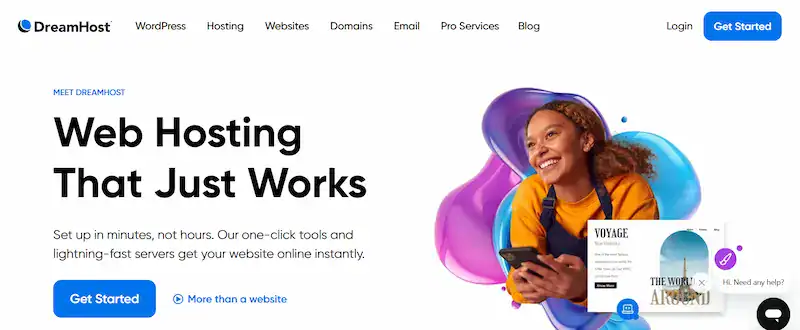
DreamHost delivers affordable and transparent shared hosting with dependable performance. It’s an excellent solution for small businesses that need a secure and scalable online presence.
Key Features:
- You get a free domain when signing up for an annual plan.
- All plans include a free SSL certificate to help secure your website.
- DreamHost offers unlimited traffic to ensure consistent site access.
- Their 97-day money-back guarantee is one of the best in the industry.
- You receive 24/7 customer support via live chat and ticketing.
Pressable
Pressable offers premium shared hosting focused on WordPress performance and is backed by Automattic, the creators of WordPress.com.

Key Features:
- Your site runs on a managed WordPress environment for peak performance.
- Jetpack Security and Performance tools come included for free.
- Pressable provides free expert site migration assistance.
- Daily backups and a global CDN ensure uptime and speed.
- They offer a 100% uptime guarantee for peace of mind.
Indystack
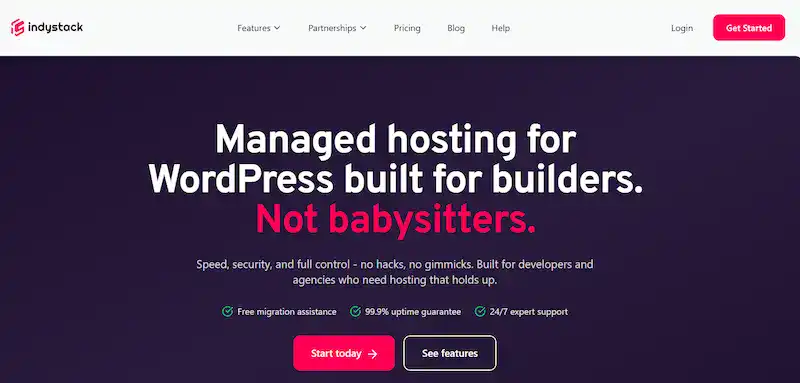
Indystack delivers a developer-friendly shared hosting platform built for freelancers and small teams who need performance and simplicity.
Key Features:
- You can deploy WordPress websites with one click.
- Each site is isolated in its container to prevent cross-contamination.
- Email integration and domain management are built in.
- You only pay for what you use, thanks to usage-based pricing.
- Developer tools are included for advanced customization.
SiteGround
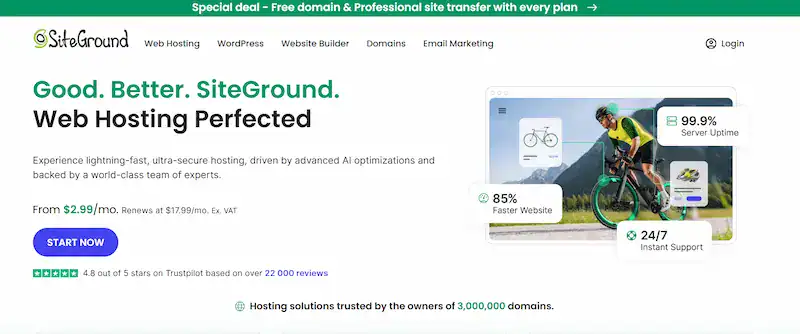
SiteGround is known for excellent customer support and robust security features, making it ideal for small businesses with growth ambitions.
Key Features:
- SiteGround provides daily backups to protect your data.
- Every hosting plan includes a free SSL certificate for website security.
- Managed WordPress hosting is available to optimize site performance.
- Advanced security tools are in place to defend against threats.
- You can access expert customer support 24/7.
Bluehost
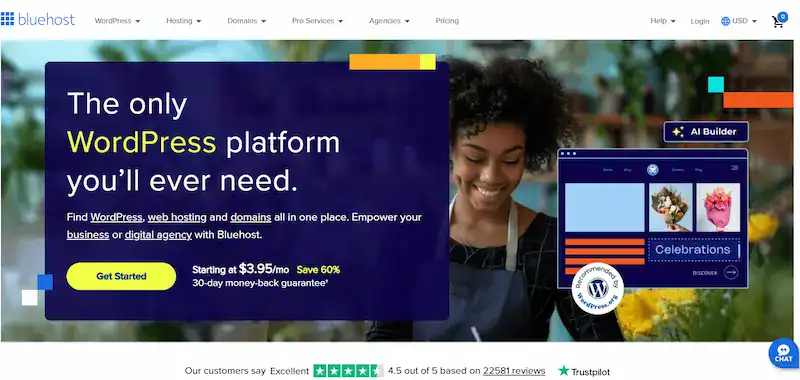
WordPress.org officially recommends Bluehost, which is especially friendly for beginners building small business websites.
Key Features:
- Bluehost includes a free domain for the first year of your plan.
- One-click WordPress installation makes launching your site easy.
- You get a free SSL certificate to secure your customer data.
- Customer support is available around the clock.
- Bluehost’s plans can scale with your business growth.
Hostinger
Hostinger offers fast, affordable hosting services with a sleek control panel, which is ideal for startups and small businesses on a budget.

Key Features:
- Hostinger includes a free domain and SSL certificate with premium plans.
- Their proprietary hPanel interface is beginner-friendly and intuitive.
- A 99.9% uptime guarantee backs hosting.
- LiteSpeed servers help your site load quickly.
- Their global data centers optimize performance worldwide.
GreenGeeks
GreenGeeks offers eco-friendly hosting options without compromising on features or performance.

Key Features:
- GreenGeeks matches 300% of its energy usage with renewable energy credits.
- You get a free SSL certificate and domain name with your plan.
- They offer unlimited web space and data transfer.
- Nightly backups ensure your website data is safe.
- Their support team is available 24/7 to assist you.
Hosting.com
Hosting.com is a performance-focused provider offering blazing-fast page load speeds and excellent uptime for small businesses.

Key Features:
- Their Turbo Servers deliver up to 20x faster loading times.
- SSL certificates and SSD storage are included for free.
- An anytime money-back guarantee covers you.
- Support is available 24/7/365 via chat, email, and phone.
- Developer-friendly features are available for customization.
BigScoots
BigScoots is a lesser-known but highly praised hosting provider. It offers fully managed shared hosting, which is ideal for serious small businesses.

Key Features:
- BigScoots provides hands-on, personalized support and onboarding.
- Daily backups and malware scans keep your site secure.
- The hosting infrastructure is fully optimized for WordPress.
- Servers are tuned for high performance and low latency.
- Their customer support is fast, expert-level, and consistently praised.
HostArmada
HostArmada is a newer but rapidly growing hosting provider offering feature-rich shared hosting with strong performance and customer support.

Key Features:
- They provide 24/7 technical support with low wait times.
- HostArmada includes free SSL, domain registration, and daily backups.
- Their shared plans use LiteSpeed servers for faster loading.
- Free website migrations are included for all new users.
- You get isolated server environments for enhanced security.
How to Choose the Right Shared Hosting for Your Small Business
When selecting the best-shared hosting for small business websites, it’s essential to go beyond just price. Choosing the right web hosting provider can impact your site’s performance, reliability, and growth potential. Whether launching a new business website or migrating an existing one, the web hosting service should align with your business goals and technical needs.
Here are the key elements to look for:
- Uptime Guarantee: Choose web hosting services with a 99.9% uptime guarantee or higher. Your website should be online and available to customers 24/7 without interruption.
- Free Domain and SSL Certificate: Many of the best web hosting providers include a free domain name and SSL certificate, helping you save money while protecting customer data and building trust.
- Ease of Use: A user-friendly control panel, like cPanel or a custom dashboard, helps manage email accounts, databases, and website files without being overly technical.
- Customer Support: To resolve issues quickly, opt for a hosting company that offers live chat support, phone support, or 24/7 ticket assistance.
- Scalability: Start with shared hosting, but ensure your web hosting provider offers flexible upgrades to VPS hosting, cloud hosting, or dedicated servers as your business scales.
A reliable hosting provider will grow with your small business, offering both entry-level performance and advanced hosting solutions when you’re ready.
Shared Hosting vs Other Hosting Types
Understanding the various web hosting options is key to choosing the proper setup for your website. While shared hosting is a great starting point, it’s essential to recognize how it compares with more advanced hosting solutions to know when to upgrade.
Shared Hosting
This is the most affordable web hosting option and is ideal for small business owners, bloggers, and startups. In shared hosting, multiple websites share the same server resources like RAM and CPU. While this keeps costs low, it also means performance can be affected by other sites on the same server. Still, it’s an excellent choice for low to moderate website traffic, brochure-style sites, and smaller online stores.
VPS Hosting (Virtual Private Server)
A virtual private server offers a middle ground between shared and dedicated hosting. Thanks to dedicated resources allocated to your site, it provides more power, speed, and control than shared hosting. This is great for growing websites that need better reliability and performance.
Dedicated Hosting
This hosting option gives you access to a physical server dedicated to your website. It’s best suited for large, high-traffic websites requiring enhanced security, custom configurations, and complete control. Dedicated hosting is powerful but comes at a premium price.
Cloud Hosting
Cloud hosting distributes your site across multiple servers, offering excellent uptime, flexibility, and scalability. It’s perfect for businesses expecting rapid growth or sudden traffic spikes, especially e-commerce hosting or app-based platforms. Many hosting companies now offer cloud hosting plans as scalable and budget-friendly alternatives.
Knowing when to transition from shared hosting plans to VPS plans, dedicated hosting, or cloud hosting can help you avoid performance bottlenecks and ensure a seamless customer experience as your online business grows.
Why Choose Shared Hosting for Your Small Business?
Shared hosting is an affordable and beginner-friendly solution for small businesses launching their first website. It offers essential features, security, and scalability without the high costs of dedicated hosting or VPS plans.
Security in Shared Hosting

While shared hosting is one of the most cost-effective web hosting options, it comes with unique security challenges due to resource sharing.
Since multiple websites are hosted on a single physical server, vulnerabilities in one site could potentially affect all others. That’s why understanding the security features offered by your web hosting service provider is essential, especially for small business owners handling customer data or running an online store.
Look for web hosting providers that offer robust baseline protections such as free SSL certificates, HTTPS integration, and DDoS protection.
Some hosts go even further, offering malware scanning, weekly or daily automatic backups, firewalls, and server management features to safeguard your data. Isolation techniques, like container-based environments or jailed file systems, help prevent cross-site contamination, which is essential for any small business website.
The best web hosting companies prioritize site safety measures and even include enhanced security settings like automated backups, spam filtering, and secure FTP access.
Choosing a reliable hosting provider with proactive protection tools ensures your site is better equipped to handle threats without needing to be a tech-savvy user.
Migration & Setup Experience
Many small business owners find switching from an existing website or a previous host daunting. A smooth and supported onboarding process is critical when choosing a web hosting provider.

Fortunately, many popular web hosting services now offer free site migration or even complete website migration services to make the transition seamless.
Look for providers that support one-click WordPress installation and auto-installers for other content management systems (CMS). These tools significantly reduce setup time and allow even non-technical users to start quickly.
A well-designed web hosting control panel also plays a vital role by giving users easy access to site management tools, email hosting, and database backups.
Some of the best web hosting services even offer live walkthroughs, chat-based onboarding, or tutorial videos to guide users.
Support for transferring your email accounts, website files, and domain registration can make a big difference for small business web hosting clients. In short, choosing a hosting company that makes migration easy will save you time, reduce stress, and get your business online faster.
Hosting and SEO: Why It Matters
Many small business owners overlook how their web hosting service impacts SEO, but your hosting setup can directly influence your search engine rankings. Google and other search engines consider several technical details affected by your host choice.
Speed is a significant factor; sites hosted on servers with SSD storage, content delivery networks (CDNs), and caching tools load faster, improving dwell time and reducing bounce rate.
Additionally, having a free SSL certificate (HTTPS) is not just a trust signal for users; it’s a confirmed ranking factor. Thankfully, many hosting providers include SSL certificates even on their basic plans.
Uptime is another critical metric. A site with frequent outages (even brief ones) may be penalized in rankings, so choose a provider with a proven uptime guarantee. Also consider server response times, which should ideally stay under 200ms.
Ultimately, even the best website won’t perform well in search if it’s on an unreliable or underpowered host. Choose a reliable hosting provider with proven performance to improve your SEO and grow website traffic over time.
Eco-Friendly Hosting Options
As sustainability becomes more than a trend, many small business websites seek eco-friendly hosting as part of their brand commitment.
If you’re building an online business and care about your environmental impact, choosing a green hosting solution can align with your values and appeal to environmentally conscious customers.
Some web hosting companies actively reduce their carbon footprint through carbon offset programs, renewable energy sources, and energy-efficient data centers. GreenGeeks and DreamHost, for example, are two well-known hosting providers prioritizing eco-conscious practices while offering features like free domain names, unlimited bandwidth, and reliable hosting performance.
Look for hosting plans that use renewable power or contribute to environmental restoration projects. In addition, some small business hosting services optimize their infrastructure to consume less energy through virtualized resources or reduced power usage.
Choosing eco-friendly web hosting not only helps reduce emissions but can also strengthen your brand identity. Highlighting this decision on your business website may give you a competitive edge with like-minded customers and clients looking to support sustainable businesses.
Ecommerce Readiness
If you’re launching an online store on a budget, shared hosting can be a practical starting point, especially for small business owners testing the e-commerce waters. While shared hosting isn’t built for a massive scale, many web hosting providers offer e-commerce shared plans with just enough power and features to get your store online.
Look for shared hosting plans that offer:
- One-click installs for WooCommerce, Magento, or PrestaShop
- Support for SSL certificates, PCI compliance, and a dedicated IP address
- Unlimited bandwidth and generous storage space
- Seamless integration with popular payment gateways
- A strong uptime guarantee to minimize cart abandonment
While shared hosting may not offer the raw power of dedicated servers, it’s often more than sufficient for small to mid-sized e-commerce sites, especially those just getting started. A good shared hosting service provider will ensure secure transactions, decent load speeds, and scalable room to grow.
Backup & Restore Options
A solid backup and restore system is one of a shared hosting plan’s most overlooked but essential features. Since shared hosting environments are more vulnerable to shared resource disruptions, automated backups provide critical protection against data loss, accidental deletions, and plugin mishaps.

Top shared hosting providers include:
- Daily or weekly backups at no extra charge
- One-click restore features from your control panel
- Database backups with rollback options
- Integrated or third-party automated backup tools
- Optional off-site storage for extra security
Whether you’re managing a WordPress website, an ecommerce store, or a blog, backups ensure your website’s files, databases, and content remain safe. Choosing a shared hosting provider with reliable restore functionality helps minimize downtime and protects your business website from costly disasters.
Control Panel Deep Dive
A powerful but simple web hosting control panel is essential in shared hosting, especially for beginners or small business owners without technical teams. With shared hosting, most management happens through tools like cPanel, Plesk, or a custom dashboard provided by your host.
Here’s what you can typically manage:
- Domain registration, DNS zones, and custom domains
- Email accounts, forwarders, and unlimited email hosting
- Free SSL certificate activation and management
- File uploads and editing via FTP or file manager
- Database management with phpMyAdmin
- One-click WordPress installation and app installers
- Resource tracking (disk space, bandwidth, CPU usage)
The right web hosting service provider will give you access to a clean, intuitive, and feature-rich control panel. This panel helps you manage everything from website traffic to site migration and security settings without touching code.
What are the Pros & Cons of Shared Hosting
Shared hosting offers a great starting point for small business owners, but it has limitations. Here’s a quick overview to help you decide if it’s the right web hosting provider model for your business needs:
Pros:
- Affordable plans are ideal for startups and budget-conscious businesses
- No need for deep technical knowledge; most tasks are beginner-friendly
- Includes essentials like a free domain name, free SSL, and email accounts
- The provider handles managed security, maintenance, and server management
- Scalable enough for most small business websites
Cons:
- Limited resources (CPU, memory) are shared with other users
- Potential for downtime or slow speeds during peak traffic
- Not ideal for high-traffic or resource-intensive applications
- Fewer customization options compared to VPS or dedicated hosting
- Shared IP addresses may impact email deliverability or SEO in rare cases
Shared hosting depends on your business stage, traffic expectations, and technical comfort level. For most small business web setups, it provides the perfect balance between cost, features, and reliability.
Conclusion
Choosing the right shared hosting provider is crucial for the success of your small business. Each provider recorded notable highlights and benefits, catering to diverse trade needs. Be that as it may, Elementor is the best choice for small businesses.
It is much appreciated for its consistent integration with the Elementor page builder, strong security features, and user-friendly dashboard. By choosing Elementor, you can focus on developing your trade without worrying about the specialized viewpoints of hosting. Confirm them as we discuss the culminating hosting Configuration that fits your needs and budget.
FAQs About Best Shared Hosting for Small Business
Why is Elementor considered the best shared hosting for small businesses?
Elementor offers consistent integration with its capable page builder, optimized execution, strong security features, and a user-friendly dashboard. These highlights make it perfect for small businesses looking for a solid, easy-to-use hosting solution.
How does Elementor’s hosting guarantee quick loading times?
Elementor’s hosting employs SSD capacity, advanced caching, and a global Content Delivery Network (CDN) to deliver fast loading times, improving user experience and SEO performance.
Can I effectively manage my site with Elementor’s hosting?
Yes, Elementor’s hosting has a natural dashboard that rearranges location administration. Whether you require screen execution, manage reinforcements, or introduce overhauls, everything is centralized in one easy-to-use interface.
Is the user back accessible with Elementor’s hosting plans?
Elementor offers 24/7 user support through live chat and mail. Their knowledgeable back group can help with a wide range of issues, guaranteeing you get the assistance you require when you need it.
What makes Elementor’s hosting plans adaptable?
Elementor’s hosting plans are designed to accommodate developing websites. You can effortlessly overhaul your assets as your site’s activity increases, guaranteeing that your site can handle expanded requests without compromising execution.

